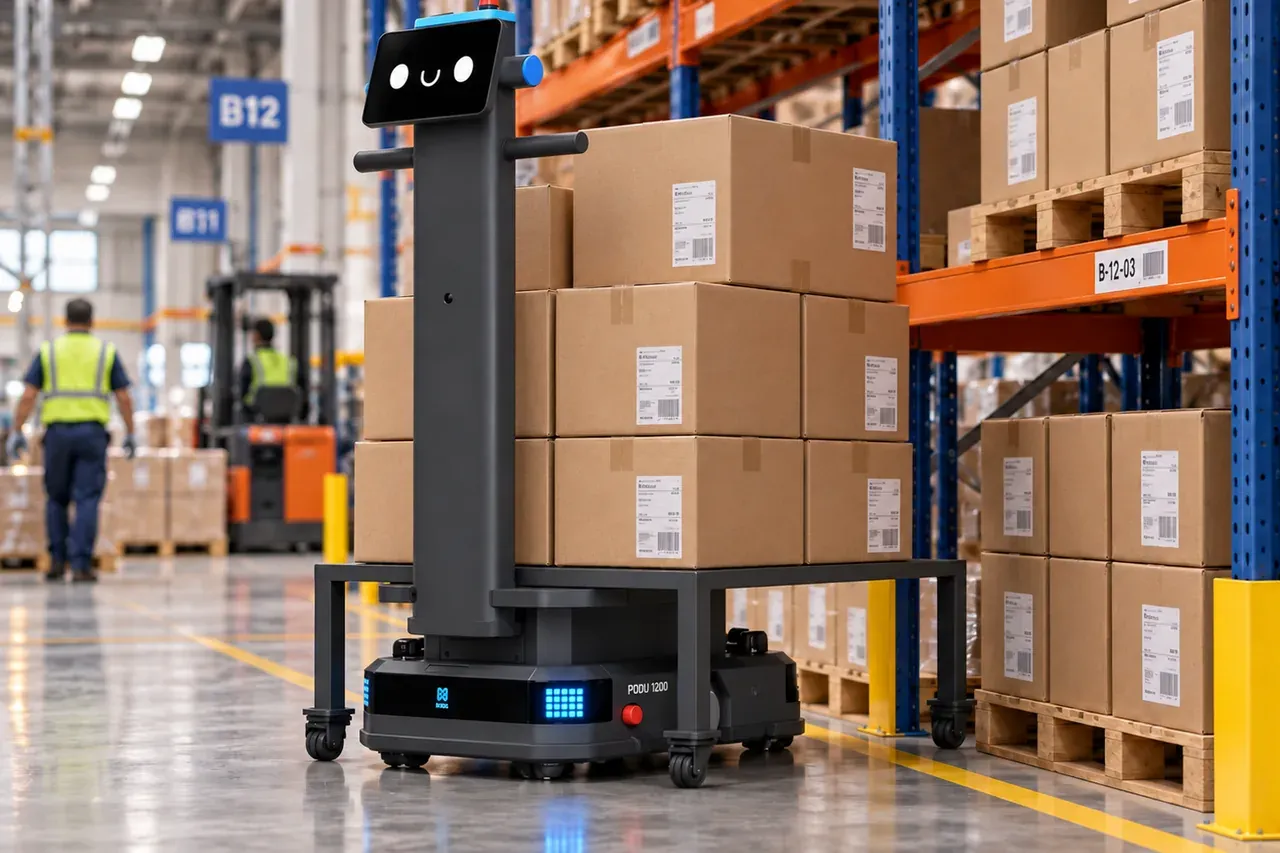

Robotics and cobots

We integrate industrial and collaborative robots into the lines you already run, to take the repetitive, heavy or hazardous work off your team. We start by working out whether it pays off. If it doesn't, we say so.

For when there are posts nobody wants, and shifts that are hard to fill.

What we automate on your line

We don't reinvent your production; we take the repetitive, heavy or hazardous tasks off it. These are the applications we see most often in an SME.

Pick-and-place

Picking, positioning and transferring parts between stations, at line rate and without fatigue.

Palletising

Stacking boxes and finished product onto pallets, with patterns that change by reference.

Machine tending

Loading and unloading CNC, presses or moulding machines without tying an operator to the equipment.

Packing and end-of-line

Grouping, boxing and preparing despatch at the part of the line that tends to create queues.

Vision inspection

Machine vision to check parts and catch defects before they reach the customer.

Custom cells

When there's no off-the-shelf answer, we design the cell around your process.

Infeed Robot Outfeed
A typical cell: the part arrives, the robot picks and places, the pallet builds on the far side. The actual design depends on your line, your product and the space you have, which is what the feasibility study settles.

From the study to start-up

A cell that works isn't a robot you bought; it's the process designed around it. We work in four phases.

  1. 01

    Feasibility study

    We go to the shop floor to measure the cycle, the times and the volumes, and come back with numbers: which station, what gain, at what cost.

  2. 02

    Cell design

    We choose robot, gripper and layout around the process you already run, with safety considered from the start.

  3. 03

    Programming and integration

    We programme the paths and connect the robot to the machines and the rest of the operation.

  4. 04

    Start-up and training

    We support the start-up in production and leave your team able to run and adjust it.

Questions about robotics

What SMEs usually ask before putting a robot on the line.

Does a robot pay off for a company my size?

It depends on volume and repetition, not headcount. A station with a repetitive cycle running full shifts often pays off even on short runs; work that changes every day rarely does. That's the first thing we assess in the feasibility study. If the numbers don't work, we say so.

Will I have to change my production line?

Usually not. We design the cell around the process you already run, and only propose moving the layout when that's what's limiting the result. The aim is to add capacity to what exists, not make you start over.

What about the safety of people working next to the robot?

It's part of the design, not a finishing touch. Depending on the application that can mean a force-limited cobot working alongside people, or a guarded cell with safe stopping. The risk assessment happens before any programming, and the solution is sized from it.

Once it's installed, are we dependent on you?

That's not the idea. We leave your team able to run the cell, change references and make day-to-day adjustments, with documentation of what was built. We stay available for changes or breakdowns, but normal running shouldn't need us.

Got repetitive work on the production line?

A short conversation to work out whether a robot pays off in your case, where it would go first, and what would change on the line.