BellaBot
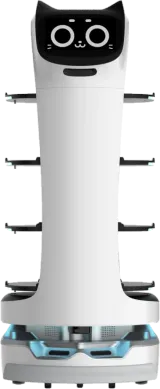
The original
- The room needs plates at the table and dishes back, and little else.
- There is nothing to promote between trips.
- The gaps between tables are wide.

PUDU BellaBot
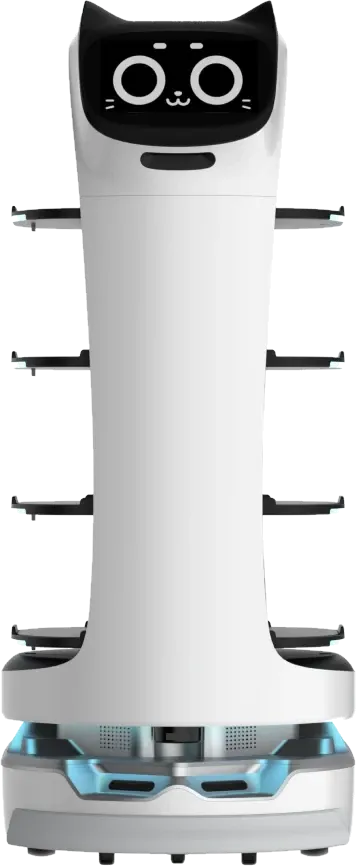
The BellaBot carries plates and drinks from the kitchen to the table, trip after trip, several trays at a time. It comes in two versions: the original and the Pro, which adds a large screen on its body. We configure the routes and your team gets to serve.
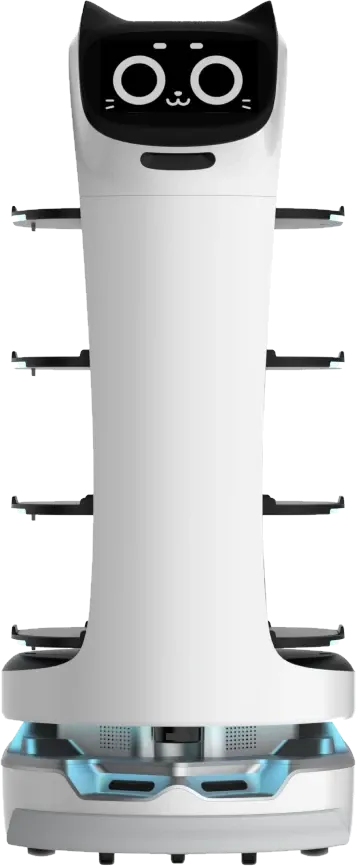
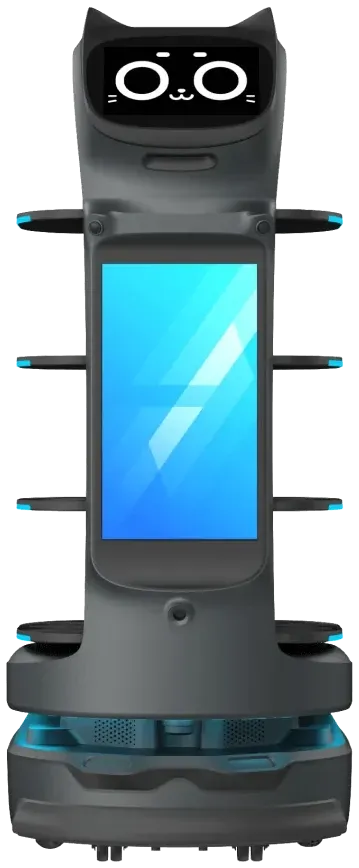
At the table they do the same job. The question is whether your room also needs a screen that advertises, and a machine that finds its way round a larger floor.
The original
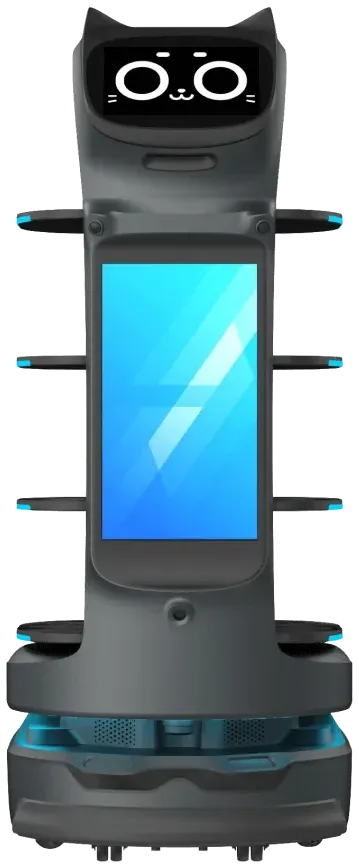
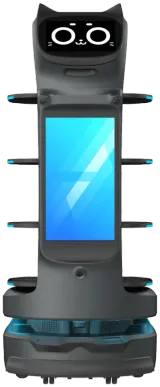
With a body screen
Kitchen to table and back. These four stages are where your team spends the shift, and these are the ones the machine takes.
The hard part of the trip is not carrying the plate, it is getting there with the room working. Three things are happening at once.
At installation we walk the space with it and the machine keeps the plan: tables, gaps, kitchen and the points where it can stop. That map is what the routes are built on.
As it moves it confirms its position from what it recognises around it. It holds the route with the room full, without anyone pointing the way.
A pulled-out chair, someone standing, a bag on the floor. It sees what is around it in three dimensions, including what sits low and what overhangs, and stops before it touches.
What sits in each area and what it is for. This is where the difference between a service robot and a trolley on wheels shows.
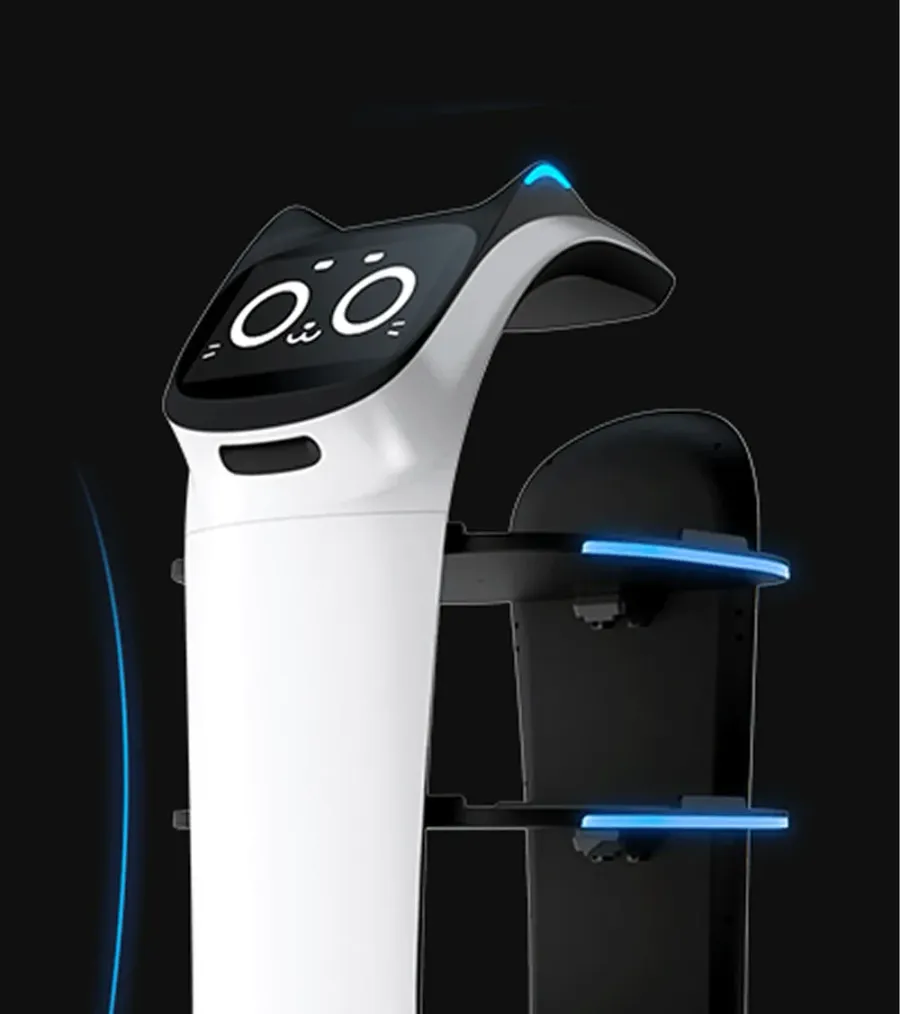
It changes expression with what the machine is doing. In a full room that is how whoever is sitting there knows whether it is coming to them, waiting, or only passing through.
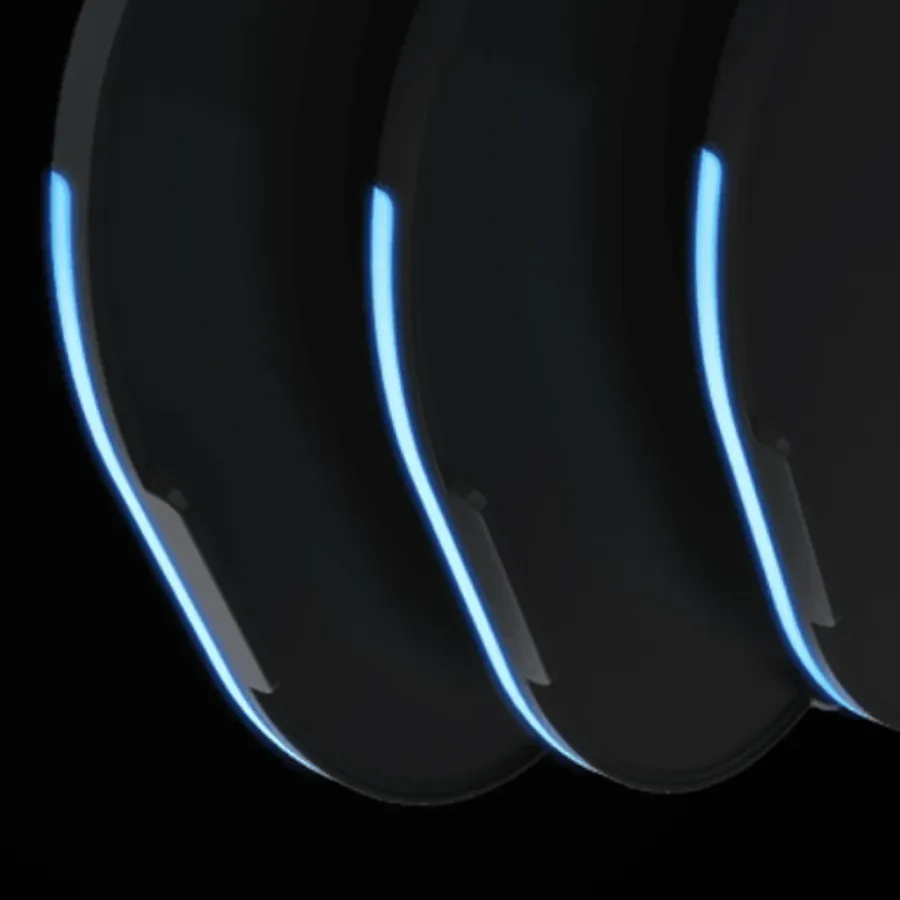
Each one lights up when its turn comes, so the right order reaches the right person without anyone explaining. The machine detects when a tray has been cleared and only then moves on.
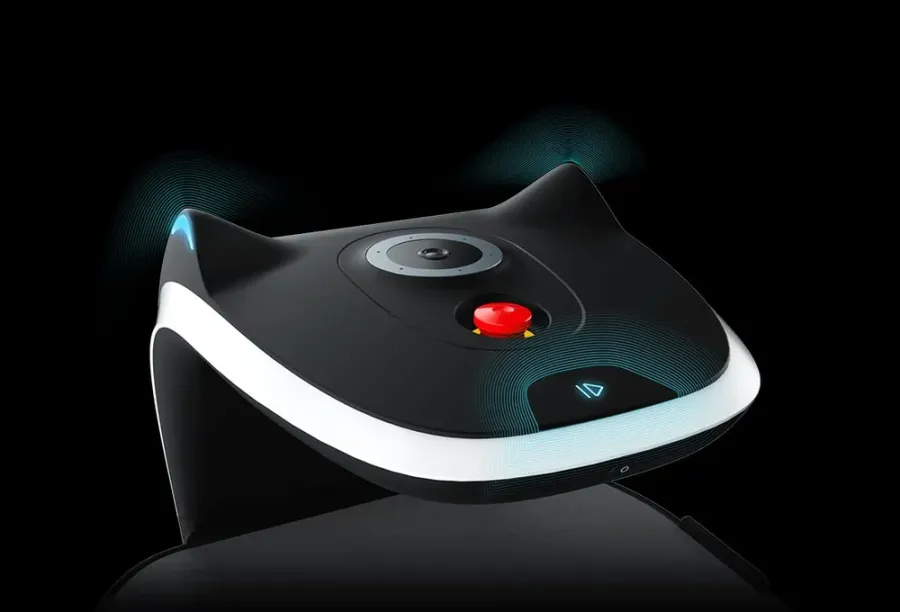
The ring on top changes with the state, so the team reads what is going on from the other side of the room. And the red button stops everything, within reach of whoever is beside it.
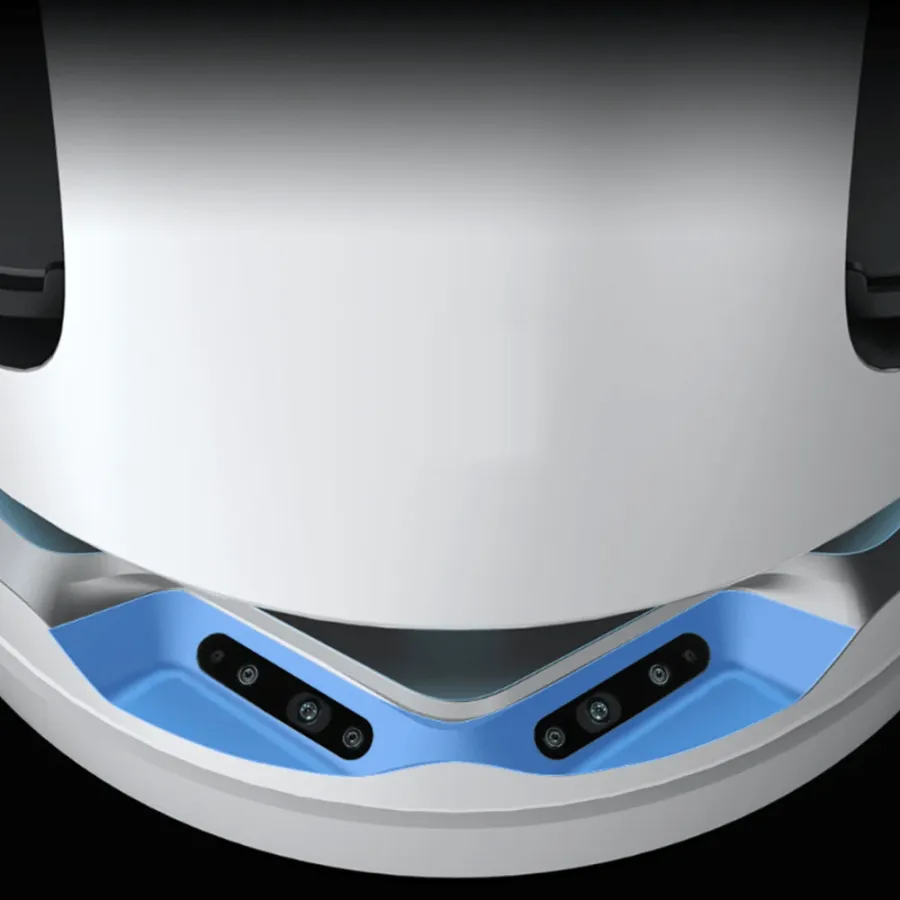
Three depth cameras in the base, alongside the laser that builds the map. They are what catch whatever sits low and whatever juts out above it, which is where a flat sensor fails.
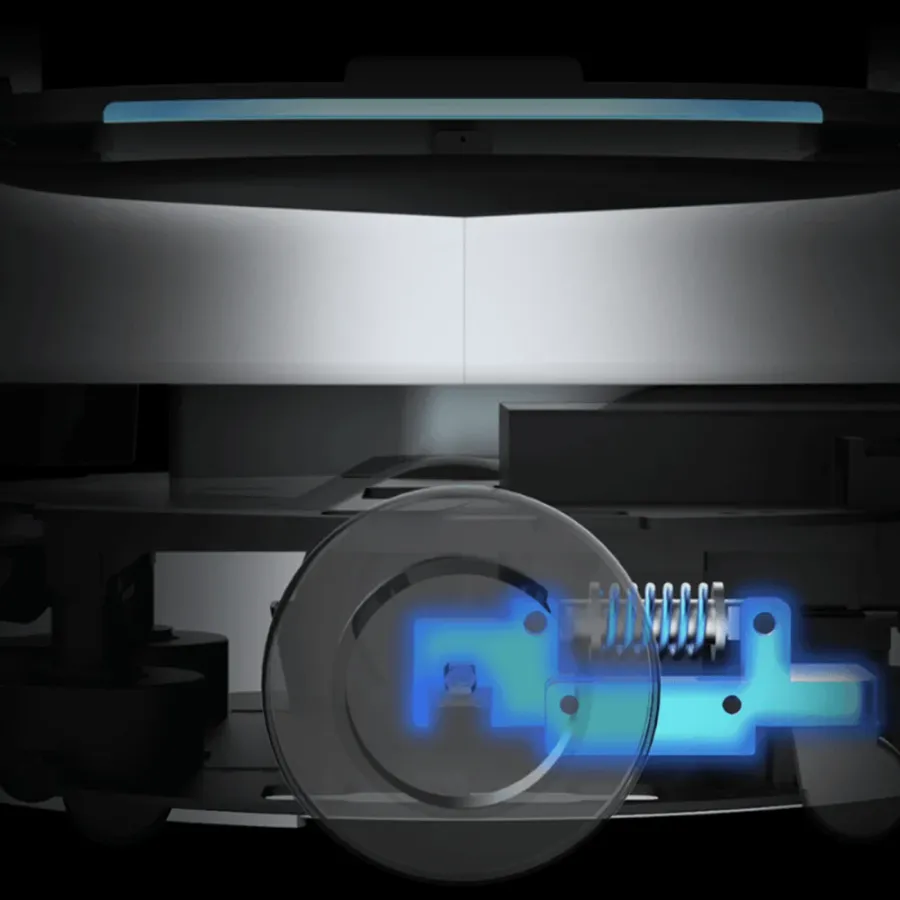
The suspension is independent and adjusts its damping to the surface. It is the difference between the glass arriving full and arriving spilled when there is a joint or a threshold on the way.
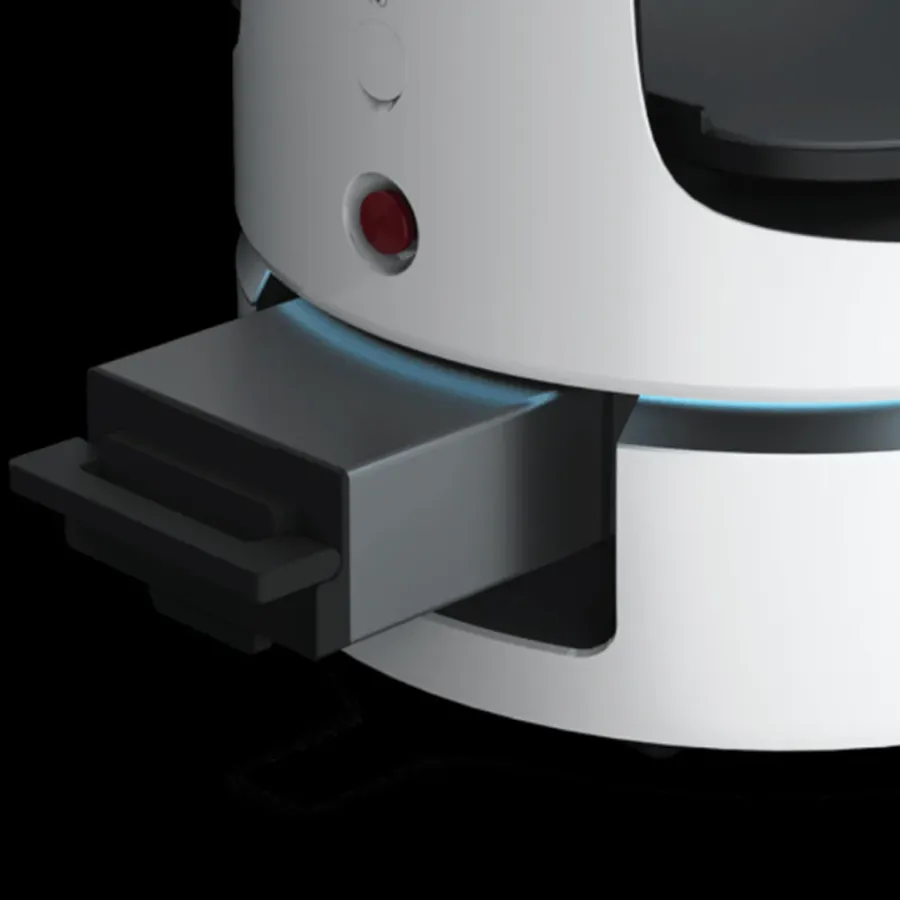
It comes out and goes back in without tools, so a long service is not waiting on a socket: the spare charges while the other one works.
On the BellaBot Pro
On the BellaBot the face is the only screen. The Pro has a second one, a large one, on the front of its body and at the eye level of someone sitting down. Your team decides what goes on it.
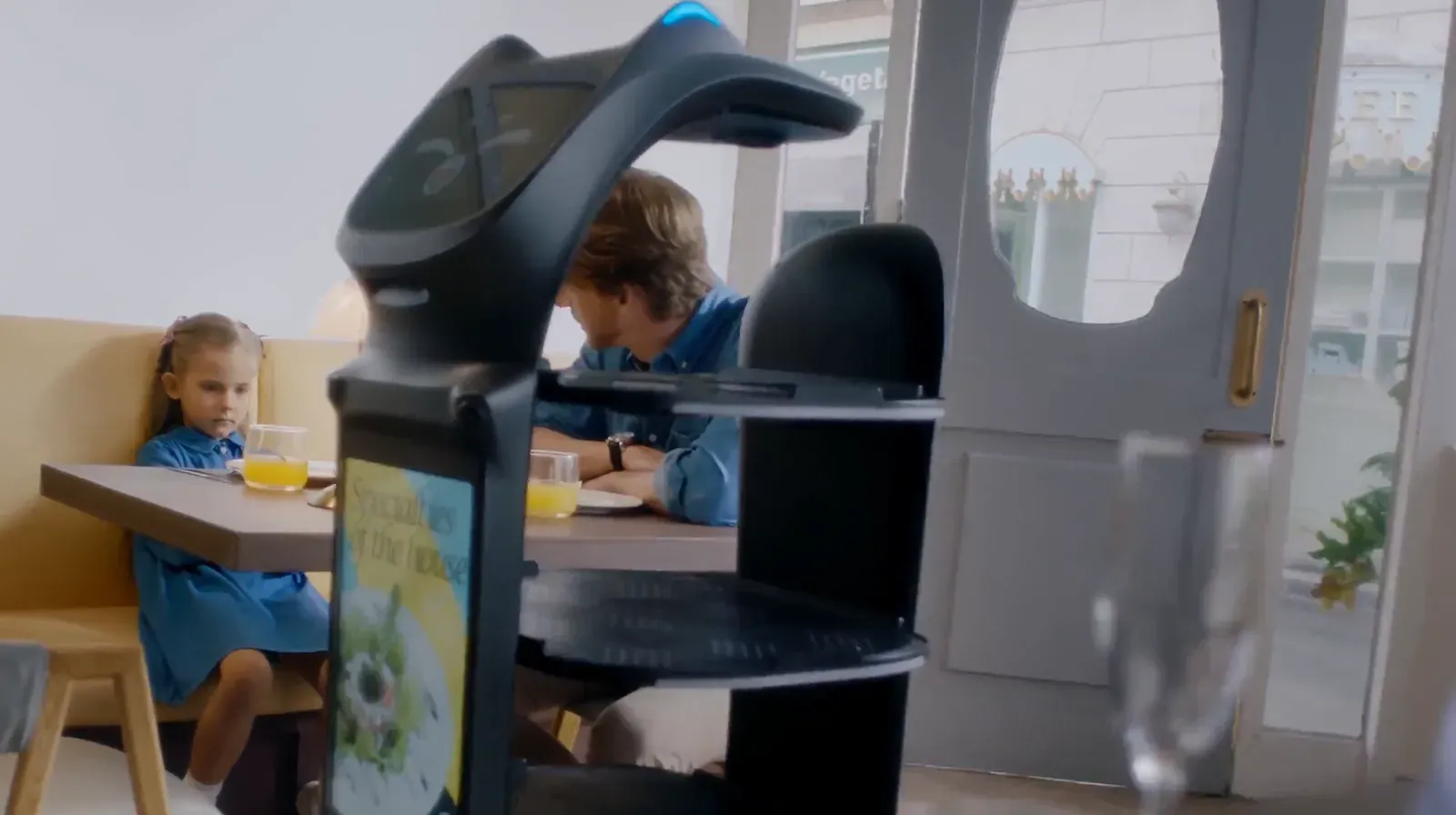
Every trip passes several tables before it reaches the right one. That is the moment to show the dessert, the dish of the day or this week's menu to the people who have not ordered yet.
At installation we set the screen up with the content you already have (images or video) and show your team how to change it when the menu does.
The screen sits in the body in facets, which reduces the glare for anyone looking at it from the side. In a room with windows, that is what keeps the advert readable.
On the BellaBot Pro
What the robot does at any moment is picked on its screen. At installation we configure the modes that make sense in your room, and the rest stay there for when they do.
From the kitchen to the table, with several orders on the same trip. It is the everyday work, and the one that saves your team the most steps.
WhenDuring service
It goes round the tables so the empty plates and glasses can be left on its trays, and takes them back to the wash-up. Your team stops making that trip with full hands.
WhenBetween courses and after the meal
It runs a set loop around the room with the campaign on its screen and, if you like, something on the trays to taste.
WhenIn the quiet hours
It takes the guest from the entrance to the table they were given, without anyone having to drop what they are doing to show them the way.
WhenOn arrival
It brings the cake to the table with music and an expression of its own on the face. It does not get used often, and it is the mode the table remembers.
WhenWhen there is a party
On the BellaBot Pro
The cat face is not just looks. In a busy room it is how a guest can tell what the robot is doing, and how they answer it.
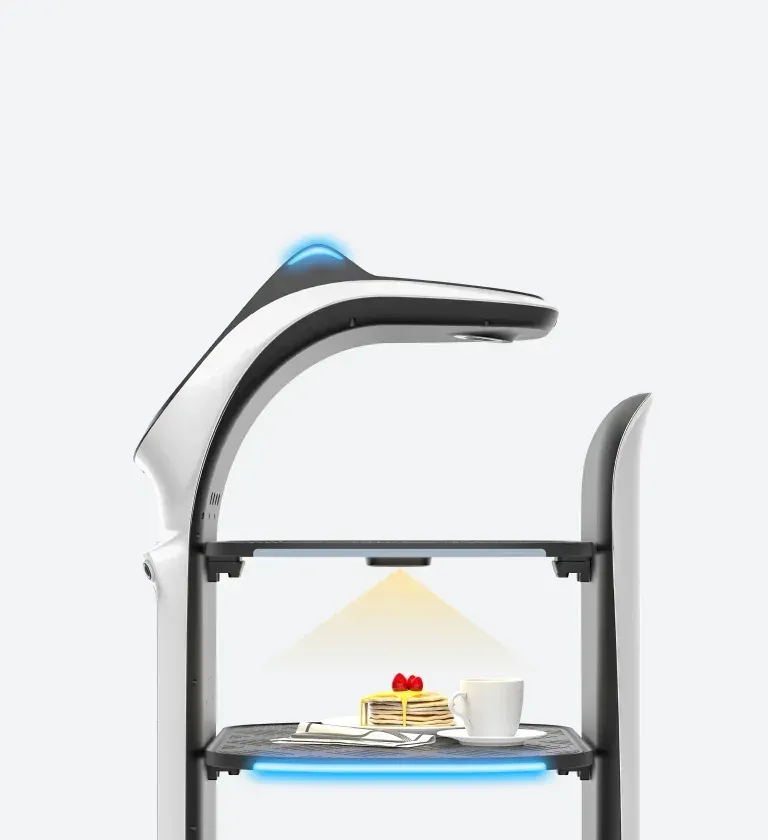
The tray light and the ambient light show which order belongs to whom.
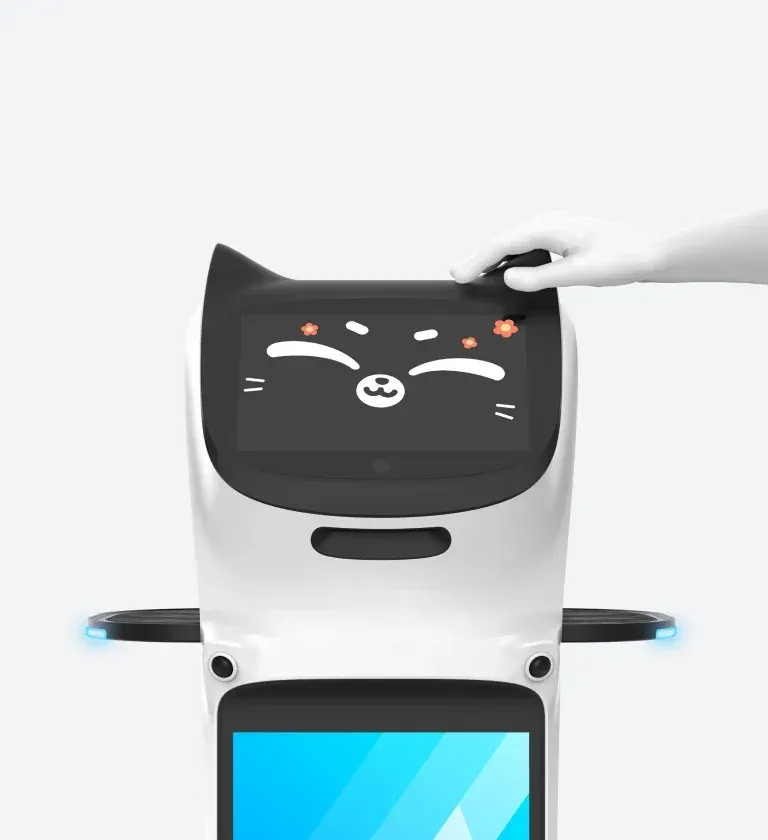
And the face answers with a new expression.
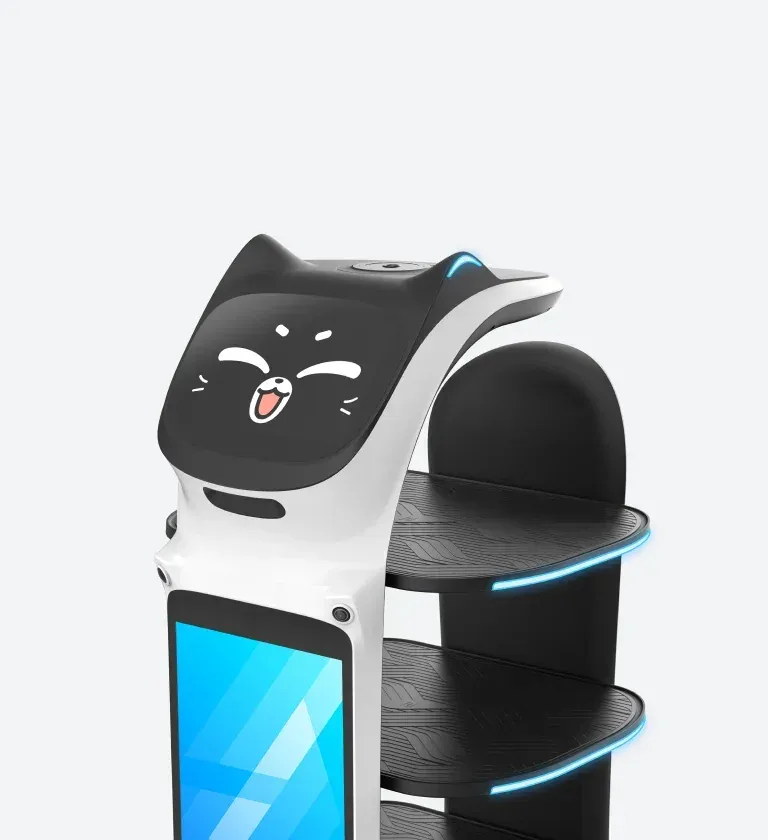
It tells the table the order is here, so nobody has to.
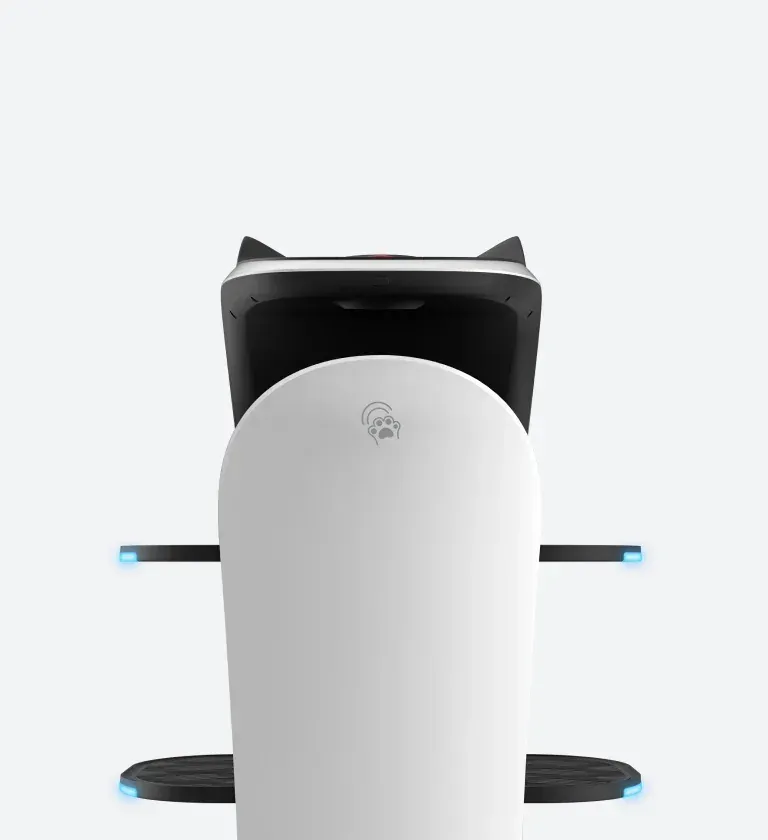
It has a touch area on its back, so nobody has to walk round to the screen.
On the BellaBot Pro
A service robot earns more when nobody has to walk over to call it. These connections are optional, and we configure them at installation.
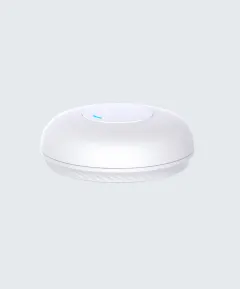
A call button brings the robot to wherever the button is, without anyone going to fetch it.
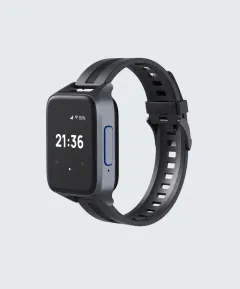
Staff call the robot from a wristwatch, without putting down what they are holding.
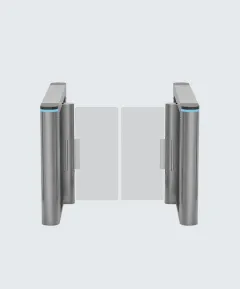
It passes compatible automatic doors and gates, so the route does not end at the first door.
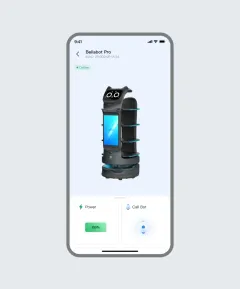
Each robot's status and battery on a phone, and the whole fleet in one place when there is more than one.
The figures the manufacturer publishes for both versions. Where they differ, each has a column of its own.
| Characteristic | BellaBotThe original | BellaBot ProWith a body screen |
|---|---|---|
| Dimensions | 565 × 537 × 1290 mm | 570 × 550 × 1290 mm |
| Battery | 25.6 Ah | |
| Run time without load | 13 h | 11 h |
| Minimum gap | 70 cm | 65 cm |
| Advertising screen on the body | None | 18.5 inches |
| Colours | White | White and black |
Figures published by PUDU Robotics and checked by us on 16 November 2026. For the full datasheet of either version, talk to us.
Rooms with a lot of tables, full shifts, and teams who spend the service walking from one end to the other.
Plates coming out without a break and a distance to cover between the kitchen and the table. The trips become its job and the service stays with the team.
Many tables at once and a short peak hour. It carries what leaves the buffet and collects what is left, without adding people just for that window.
The same run dozens of times over, always identical. This is the case where a route configured once serves every day.
Meals at fixed times and a set circuit through the floors. The machine does the carrying and whoever is with the resident stays with them.
A short visit is enough for us to tell you which version fits, what routes it would run and what it costs.