
Warehouses and industrial units
Long distances between picking and dispatch, repeated dozens of times a shift. This is the case where a route configured once serves every day.

PUDU T300
The T300 moves heavy loads between the warehouse, the line and dispatch. It is built for whatever already moves on your floor, with a platform, a shelf, a lift or a tow hitch, and it runs the route on its own once we set it.
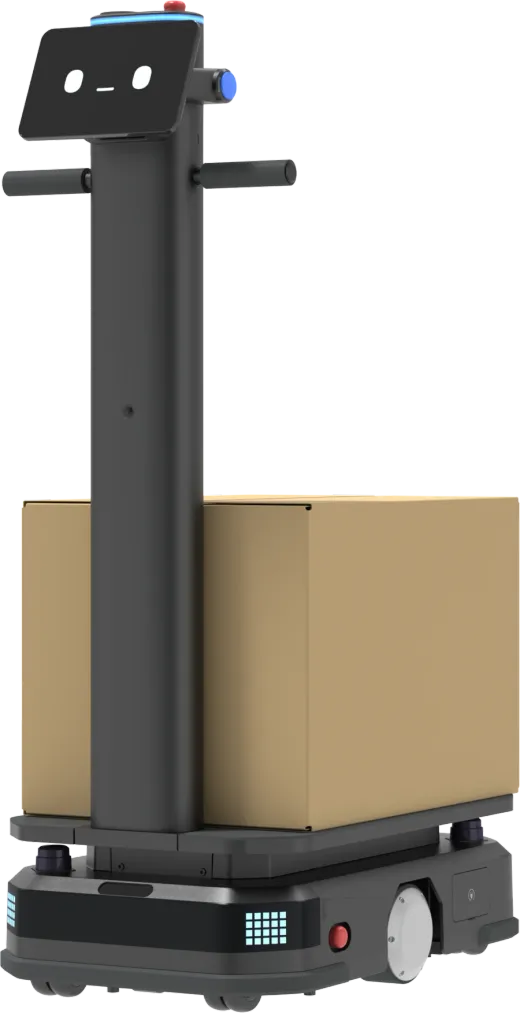
What changes is what sits on top. The machine underneath is the same one, which is why the configuration is chosen after we have seen what already moves on your floor.
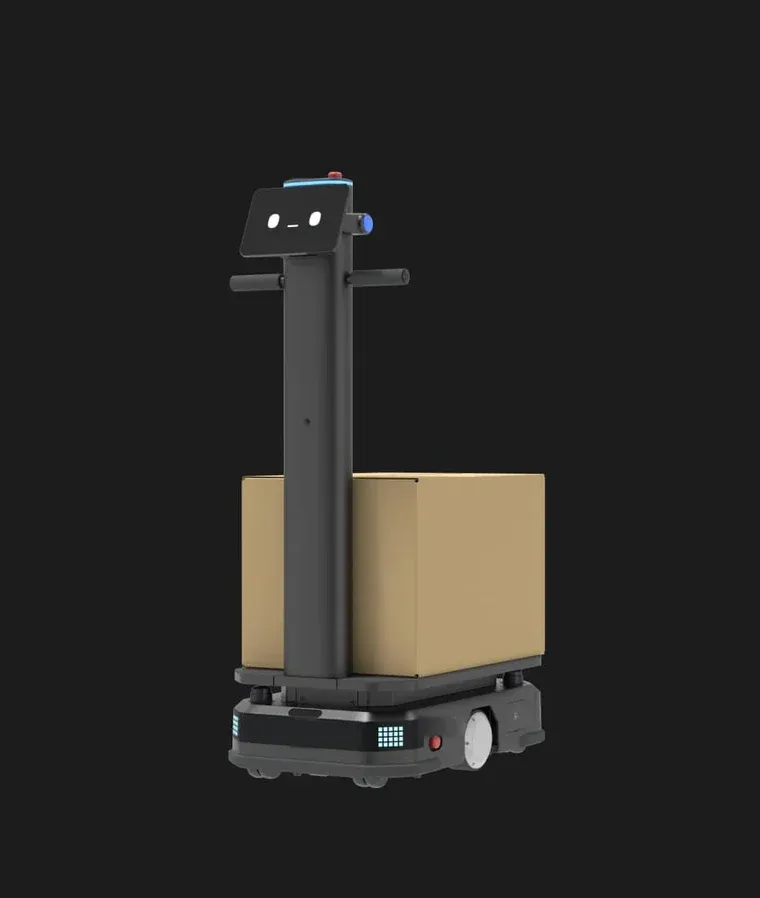
The load rides on the base with nothing else fitted. This is the configuration for boxes, crates and anything that already stacks.
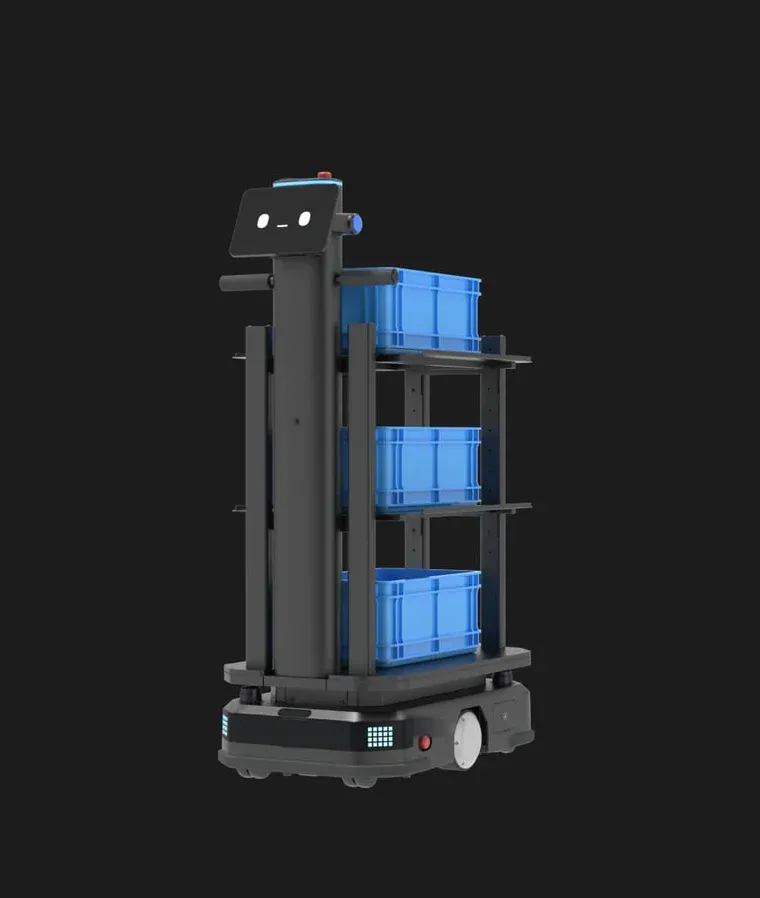
Three levels instead of one, for small parts that travel in bins today. It multiplies what fits in one trip without taking up more aisle.
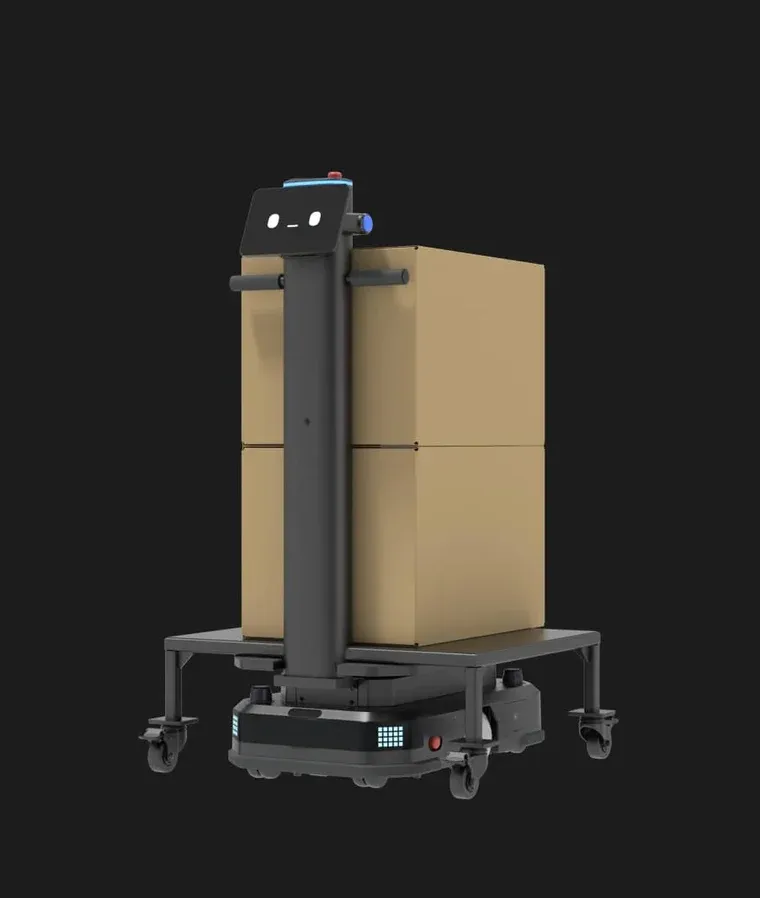
It goes under the cart you already have, lifts it and takes it. This is the configuration that does not make anyone move the load from one thing to another.
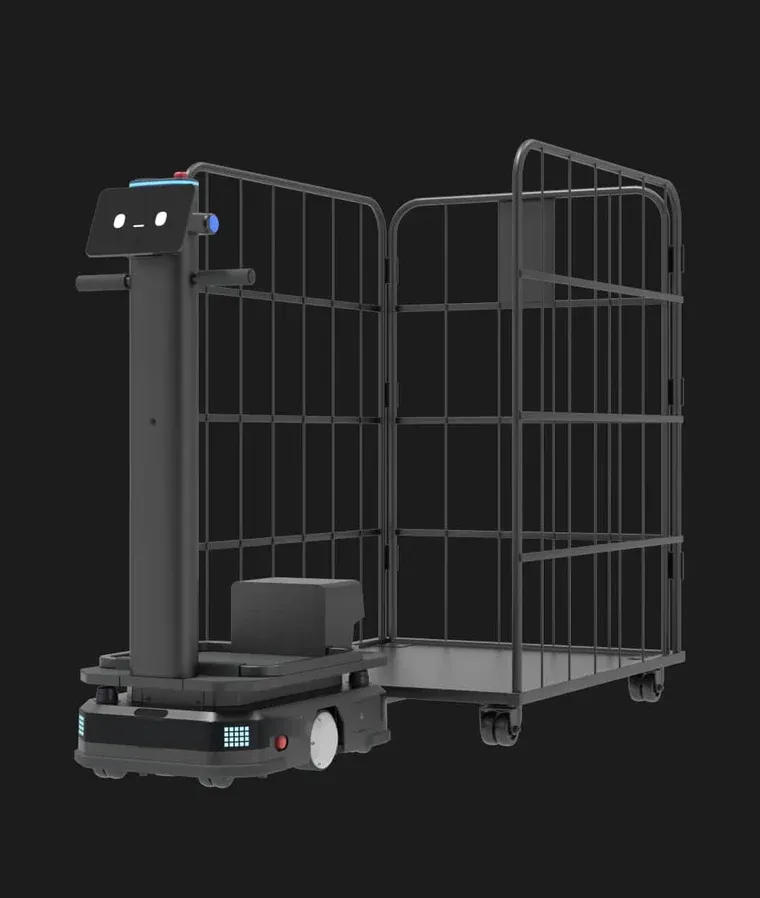
It hitches whatever already rolls, from a roll cage to a trailer. The load stays where it is and the machine becomes the traction.
Not everything in an operation is a fixed route. The same machine answers the three situations that come up in a day.
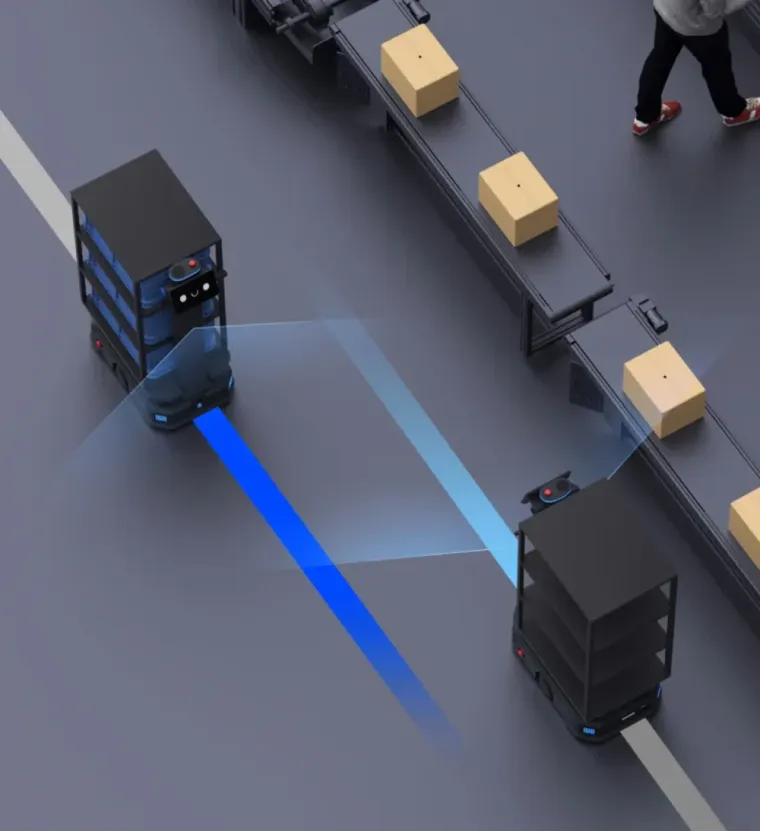
It takes the destination and runs the route. When the line moves, the map changes and the routes follow, with no building work and no markings on the floor.
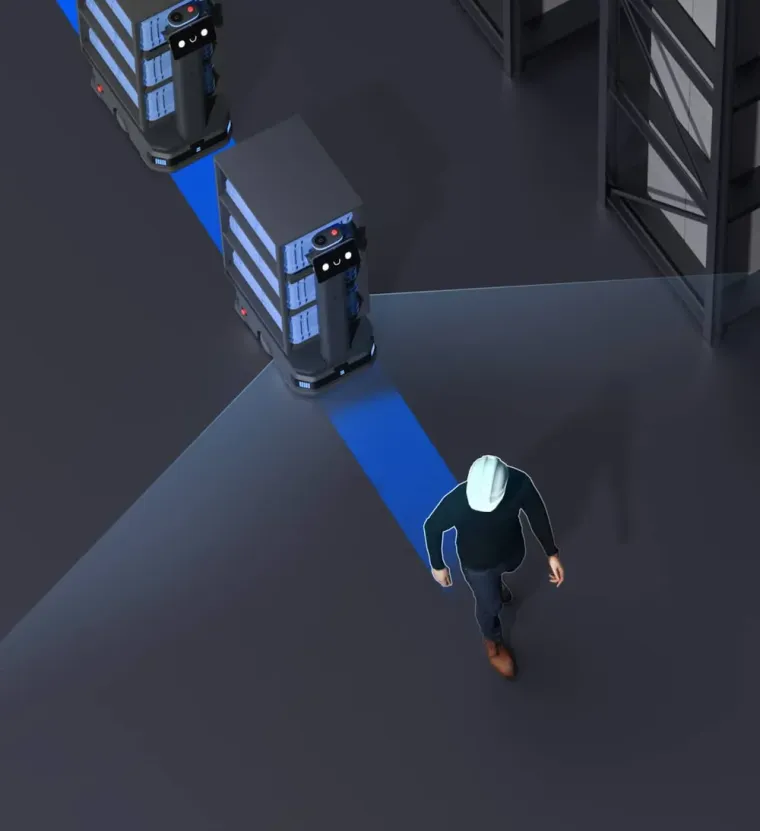
It follows a person or another machine, in line. This is the mode for picking material, where the route changes with every order.
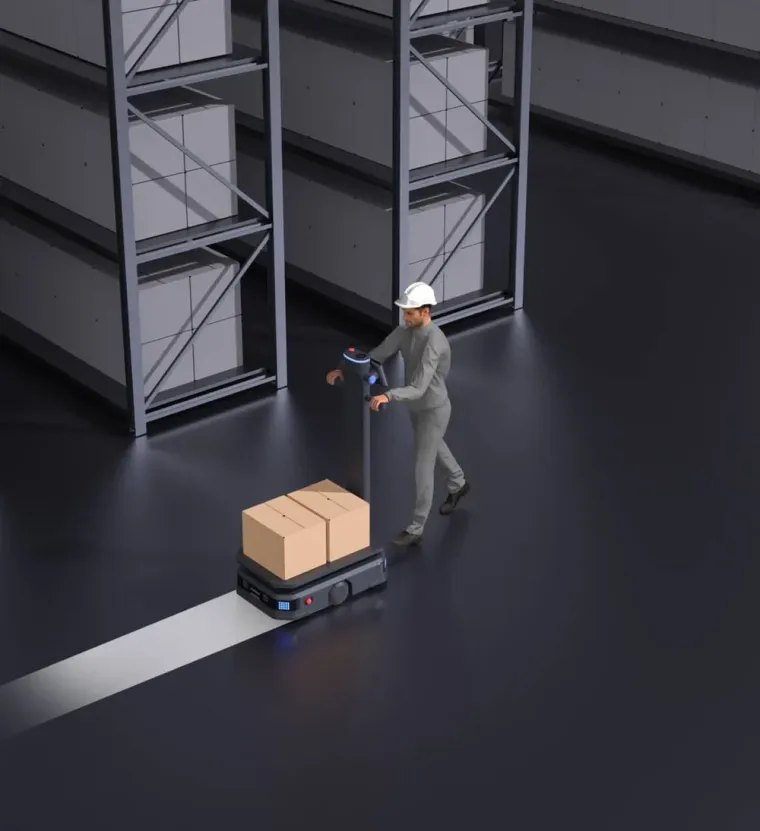
When somebody really does have to move it by hand, the electric assist does the work. It is also how the space is walked at installation, so the machine comes away with the map.
A warehouse is not rebuilt to suit a machine. These are the three things that usually stop a robot and do not stop this one.
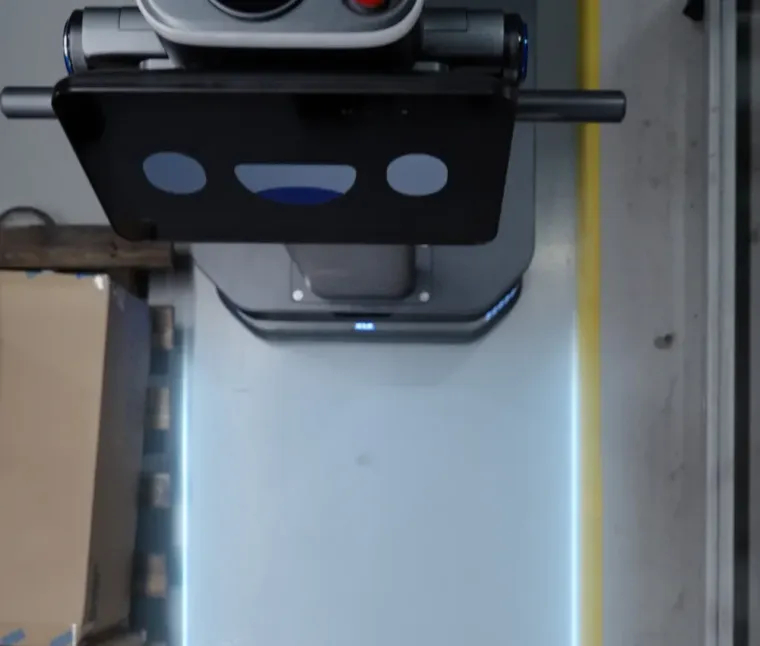
It goes where only a person with a hand cart goes today, alongside whoever is working there. The minimum clearance is in the manufacturer's figures, further down.
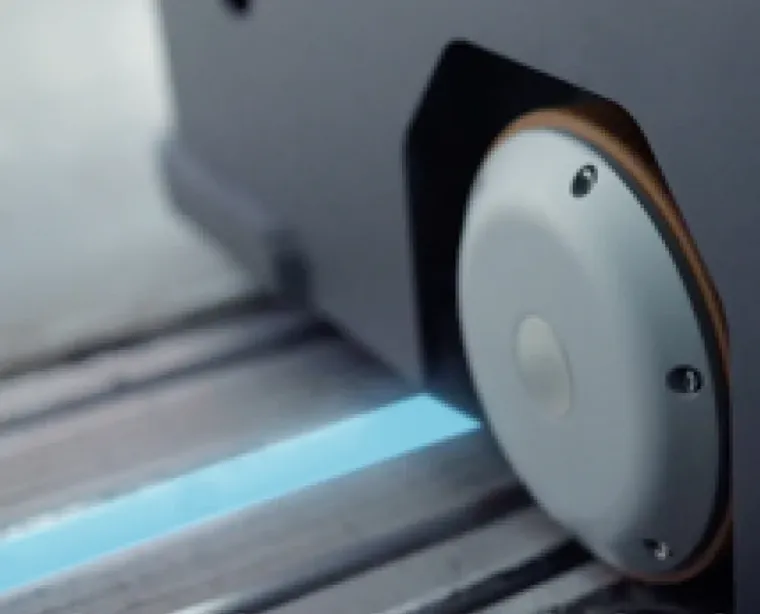
It climbs thresholds and crosses gaps between units and floors, so nobody has to level the ground or build ramps for it.
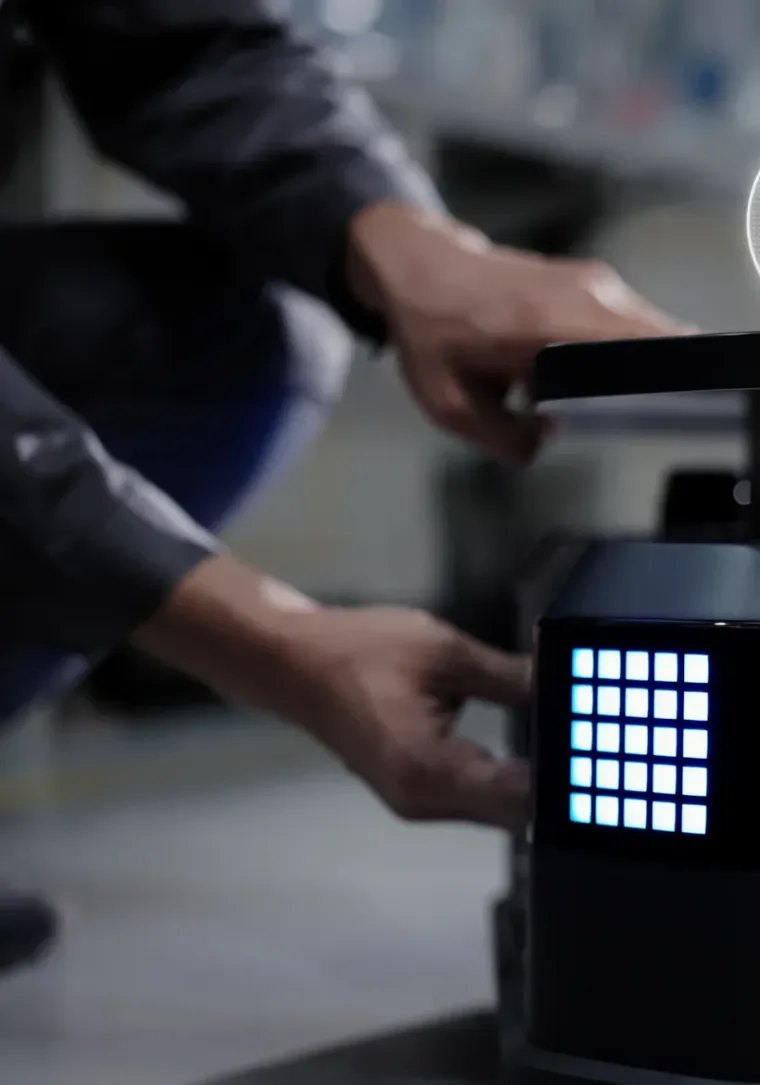
It swaps without tools. With a spare on charge the machine is not waiting on a socket between shifts, and it also returns to the dock on its own.
PUDU declares conformity with ISO 3691-4, the standard for driverless industrial trucks. In practice, this is what that means on your floor.
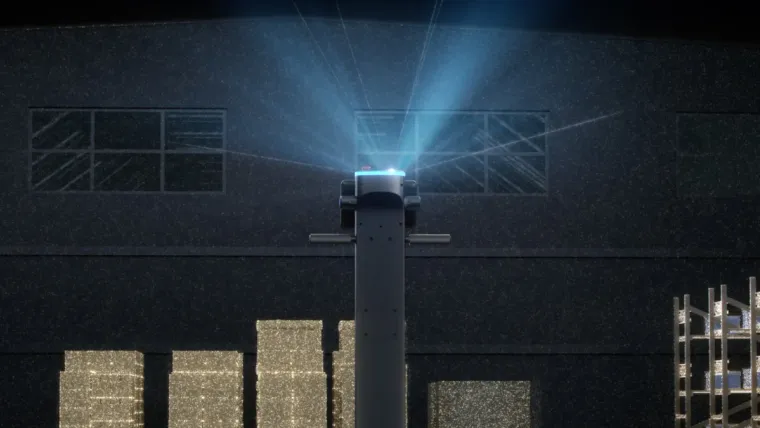
A laser and depth cameras sweeping in three dimensions, plus contact sensors on the base. That is what lets it work a shared aisle rather than a fenced one.
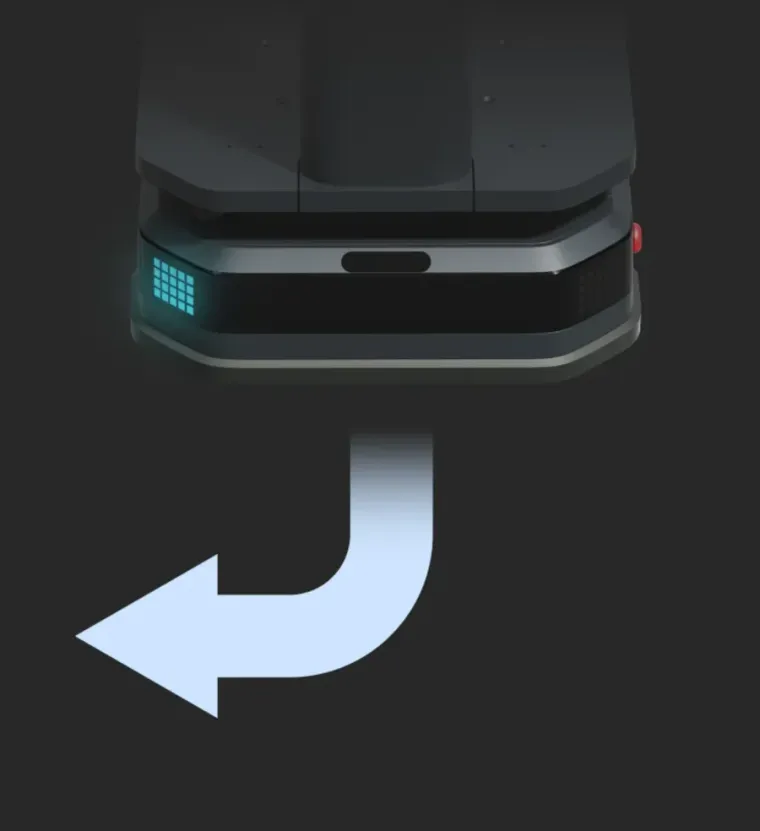
The lights on the base show the direction like an indicator. Anyone coming the other way reads the manoeuvre before it happens, which is what a pushed cart never offers.
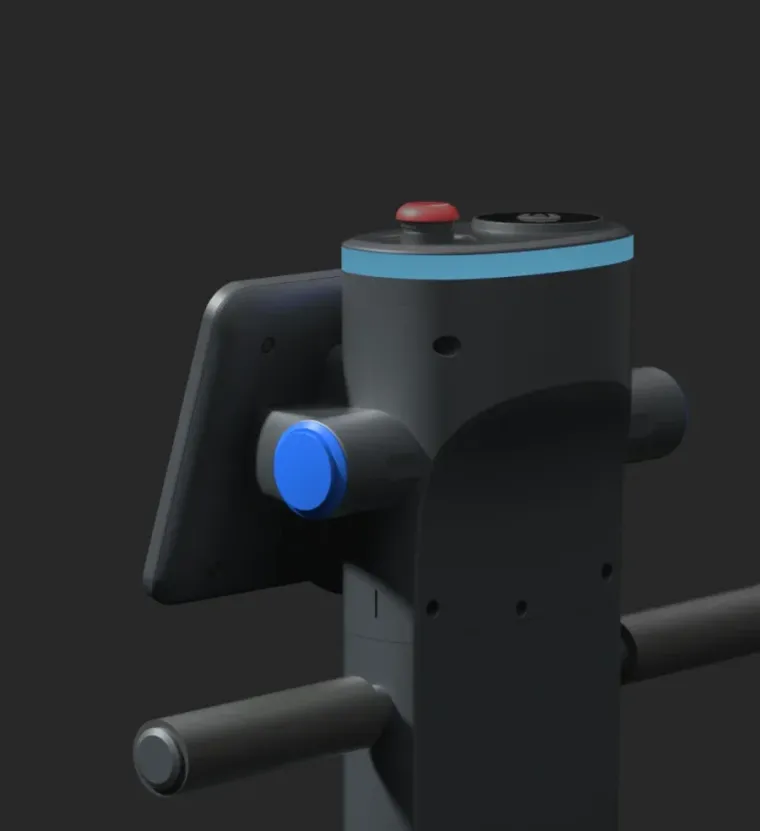
A stop button on top, within reach of anyone passing, and configurable buttons next to it for whatever your operation needs to hand.
Large spaces where material moves back and forth all day, and where that carrying takes up people who are needed somewhere else.
Long distances between picking and dispatch, repeated dozens of times a shift. This is the case where a route configured once serves every day.
Material reaching the right station at the right time, without someone leaving the line to fetch it. When the line moves, the map moves and the floor does not.
What comes off production and has to reach the bay before the lorry. The run happens at fixed times and does not wait for someone to be free.
With lift and gate integration the route crosses floors without anyone walking the machine from one end to the other.
Figures published by PUDU Robotics and checked by us on 28 September 2026. For the full datasheet of either variant, talk to us.
A short visit is enough for us to tell you which configuration fits, what runs it would make and what it costs.