
Artificial Intelligence in SMBs: advantages, risks and costs of a transformation already underway
Published on 2026-05-24 · by Catarina Costa
Artificial Intelligence Productivity Digital Transformation
For years, Artificial Intelligence was presented as a technology distant from the reality of small and medium-sized businesses. It seemed reserved for tech giants, multinationals, and companies with entire departments dedicated to innovation.
But while many still looked at AI as “the future”, it has quietly entered the most common routines of everyday business life.
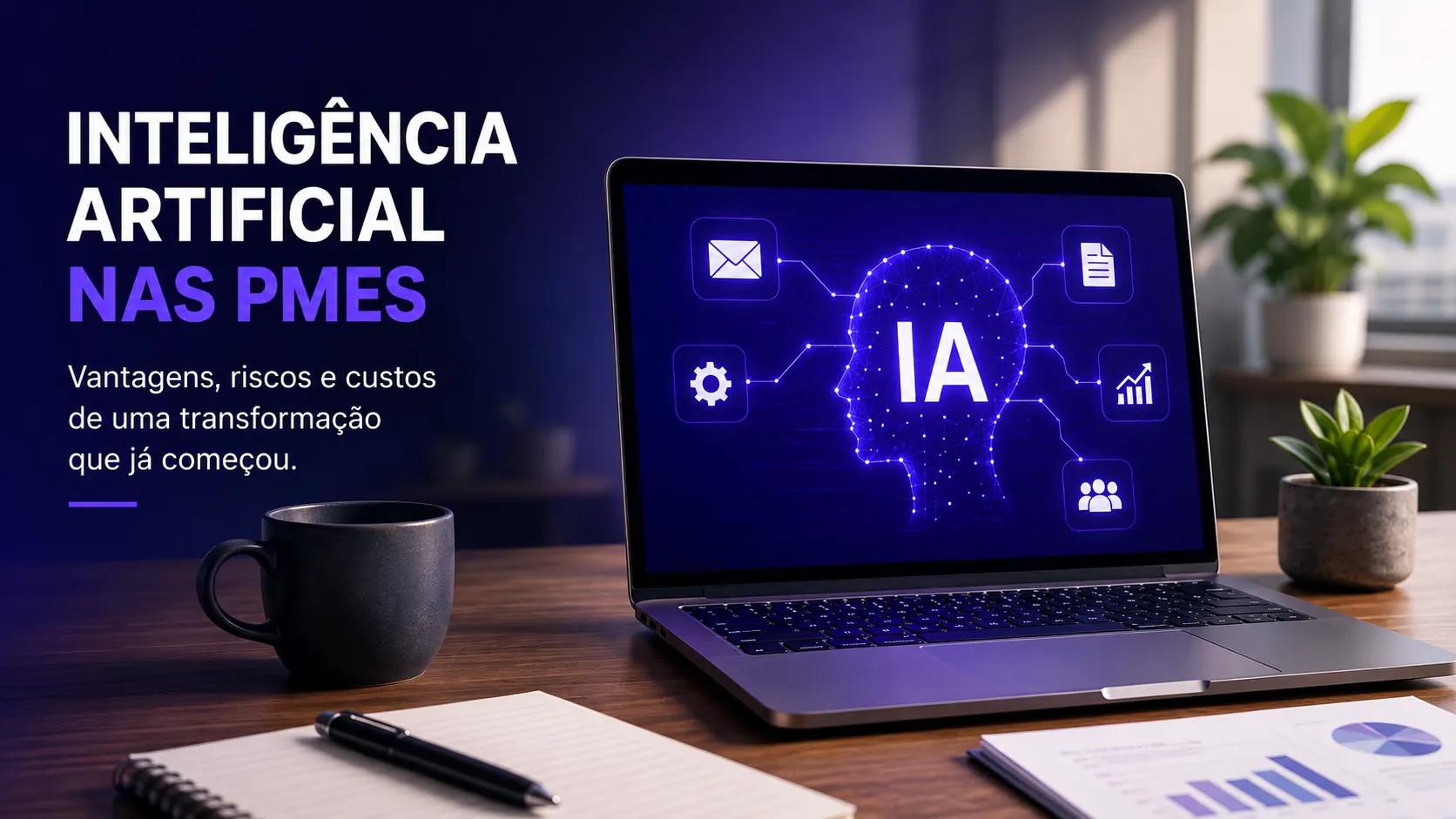
Today, it already responds automatically to emails, organises documents, summarises meetings, supports sales teams, automates administrative tasks, and speeds up processes that used to take hours of manual work. The most striking part is that many companies are already using Artificial Intelligence without even realising it.
The transformation has already begun
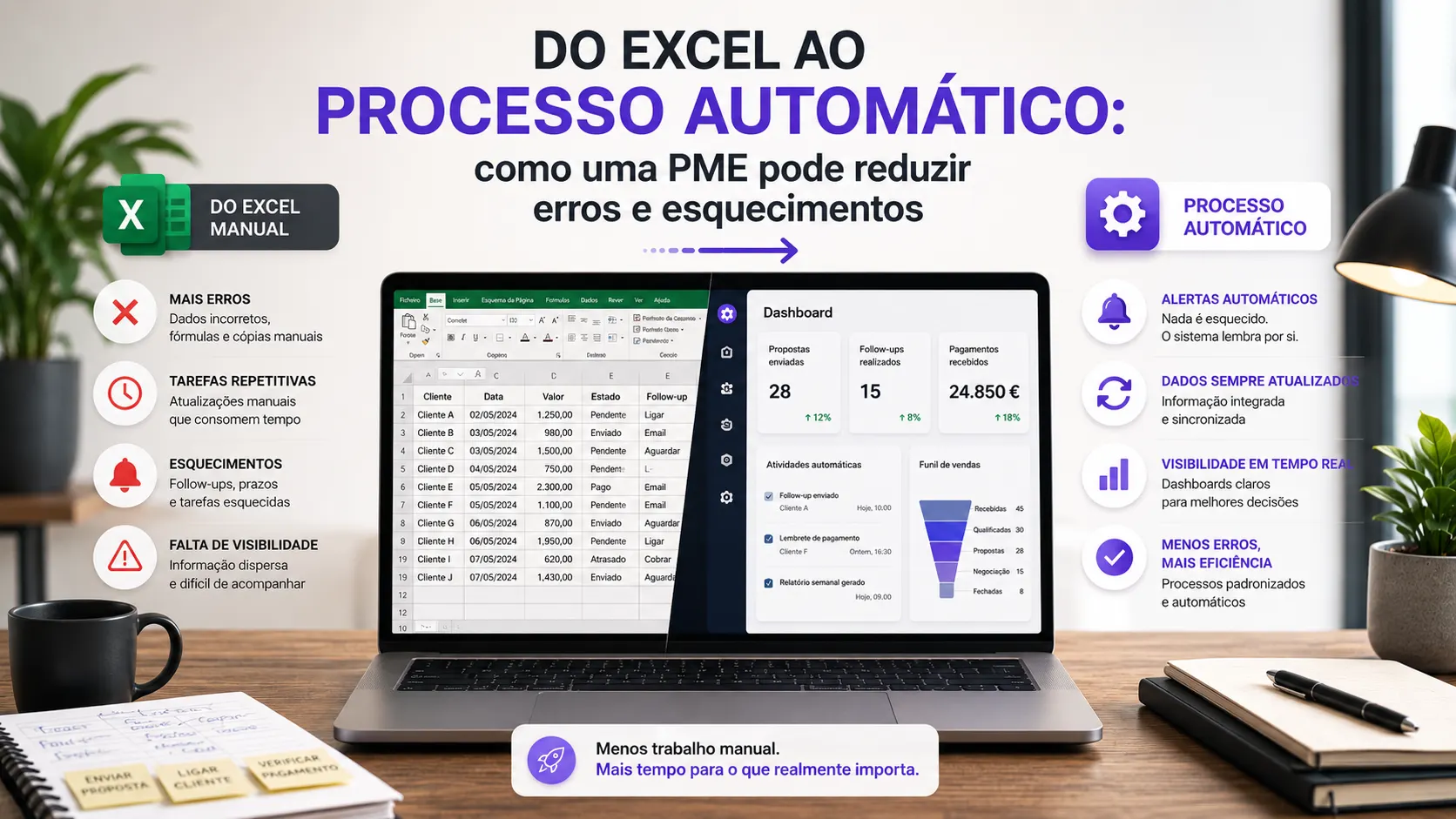
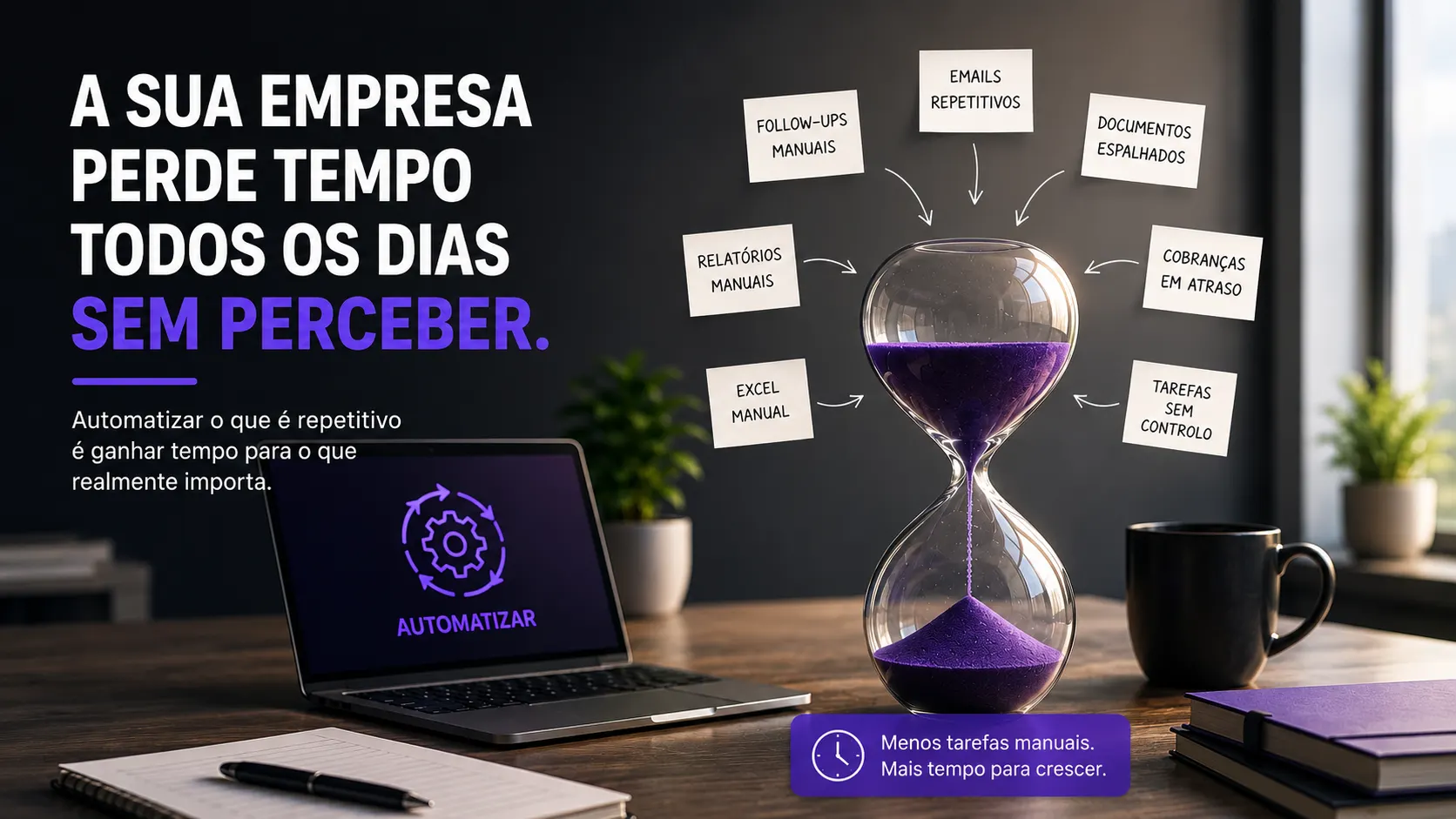
And it is happening above all in the small tasks no one enjoys doing but that keep consuming time every single day. Answering the same requests over and over. Searching for information lost in emails. Updating Excel sheets by hand. Chasing forgotten sales follow-ups. Producing reports that take hours and are outdated the moment they are sent.
In most SMBs, the problem is rarely a lack of effort. Teams work too hard. The real problem is that they remain tied to tasks that could already be happening automatically.
This is precisely where Artificial Intelligence begins to create real impact
Not to replace people. But to free teams from repetitive, operational work. Because no company grows in a healthy way when it constantly depends on human memory, manual processes, and overstretched staff.
When AI is well applied, the difference shows up quickly. Responses become faster, errors decrease, processes get more organised, and teams gain time for work that genuinely demands creativity, analysis, and human relationships.
But between the enthusiasm and the reality, there are also risks
Today, many companies start using AI tools without a strategy, simply because they feel pressure to “keep up with the market”. The result, more often than not, is more confusion, more disconnected platforms, and processes that are even more disorganised.
Artificial Intelligence does not automatically solve structural problems. Automating a confused process only creates confusion, faster.
That is why real transformation is not about using dozens of new tools. It is about understanding where operational waste exists and how technology can simplify what is already happening inside the company every day.
And this no longer demands million-euro investments as it did a few years ago
Technological evolution has made automation and AI solutions much more accessible, flexible, and tailored to the reality of SMBs.
Today the biggest challenge is rarely financial. It is figuring out where to start.
Which tasks lose the most time? Where do most errors happen? Which processes depend too much on human intervention? Which operations keep running “because it has always been done this way”?
Companies that start answering these questions sooner also gain their advantage sooner.
Because in the end, Artificial Intelligence is not just changing tools. It is changing the speed, organisation, and efficiency of companies.
And that change is already underway
At enbia, we believe AI only makes sense when it solves real problems. The goal is not to create complexity or chase empty trends, but to help SMBs turn manual processes into smarter, more efficient, and more sustainable operations.
Because the future of business is not about working more hours. It is about working better.