
7 routines still wasting time in SMBs (that can already be automated)
Published on 2026-05-23 · by Catarina Costa
Productivity Digital Transformation
In most companies, productivity loss does not come from major problems.
It is rarely a catastrophic failure or a completely wrong decision. The real waste settles in quietly, every single day, through small tasks repeated over and over. Five minutes here. Ten minutes there. A forgotten email. A lost document. A task put off until someone happens to remember it again.
And when no one notices, those small routines start consuming dozens of hours a month.
The most striking part is that many of them could already be happening automatically.
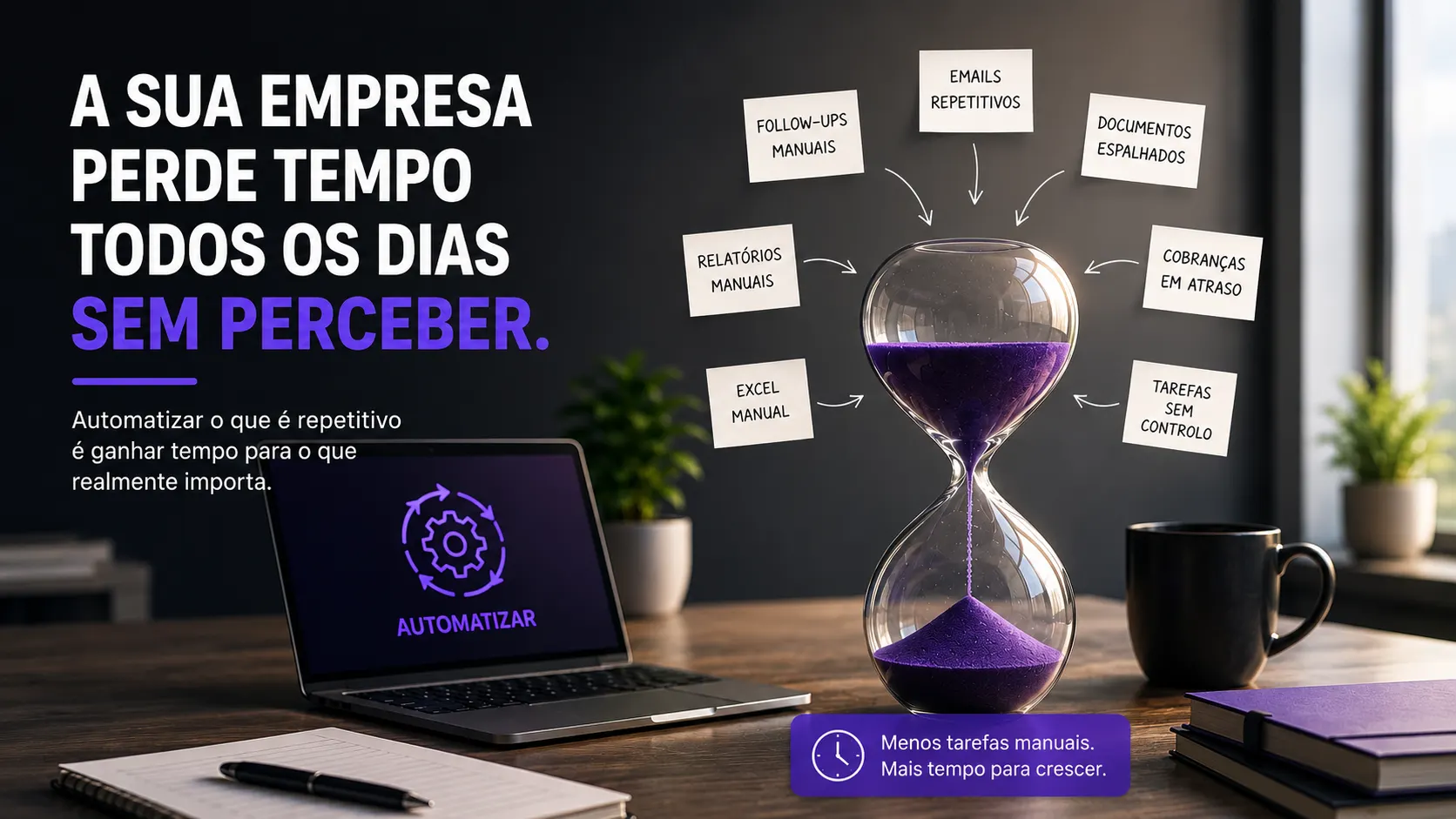
Answering the same emails over and over
Many teams spend hours every week answering the same questions: information requests, order status, scheduling, document delivery, or initial sales replies.
A large share of these interactions can already be automated - enabling faster responses and freeing up time for work that genuinely matters.
Following up on sales proposals
How many opportunities are forgotten simply because no one had time to follow up with the client?
In many SMBs, sales follow-up still depends entirely on human memory. Today, it is already possible to automate reminders, follow-ups, and sales alerts so continuity is guaranteed without constant manual effort.
Searching for lost documents
Scattered folders, attachments buried in old emails, duplicate versions, and information that is hard to find remain part of daily life in many companies.
The problem is not just organisation. It is the time lost every day searching for information that should be accessible in seconds.
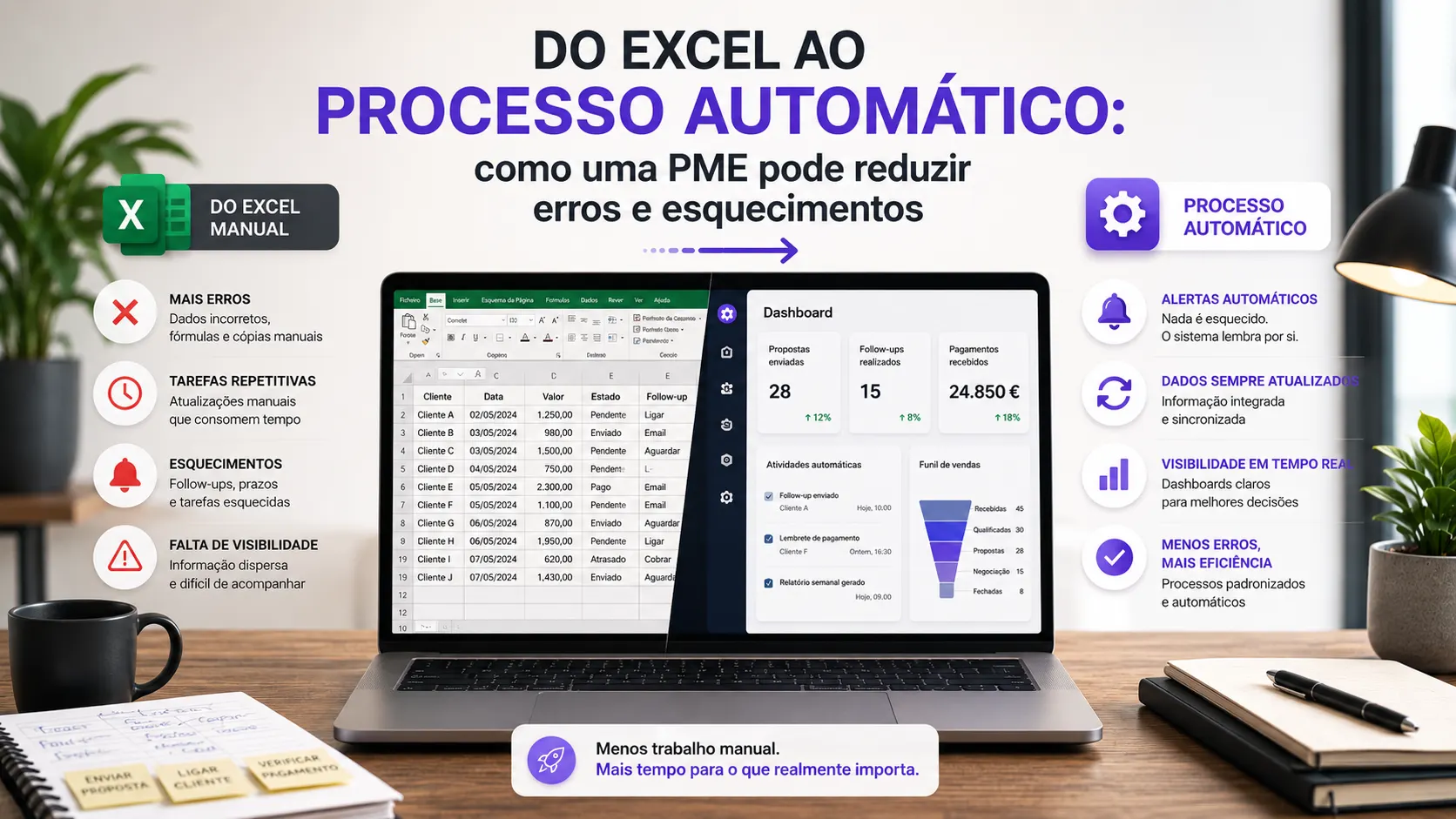
Updating Excel sheets by hand
Excel remains an essential tool for thousands of Portuguese SMBs. But when everything depends on manual updates, copy-pasted data, and constant validation, errors inevitably start to show up.
Small oversights quickly turn into operational problems.
Producing weekly reports
In some companies, someone spends hours every week pulling scattered information together just to produce exactly the same report.
Today, automated dashboards and real-time reporting can already eliminate a large part of that repetitive work.
Tracking overdue payments and collections
Many companies still verify payments by hand, send reminders one by one, and chase collections through loosely organised processes.
Beyond the time it consumes, this creates unnecessary strain on admin teams and increases the risk of mistakes.
Managing internal tasks “from memory”
Pending requests, forgotten approvals, tasks without follow-up, or processes that depend solely on someone's memory continue to block productivity every day.
When an operation depends too much on people's heads, growth quickly starts generating chaos.
The truth is that most companies don't lose time because they work too little
They lose time because they remain tied to too many manual processes.
And that waste rarely shows up as a line item in the budget. But it shows up in tired teams, constant delays, repeated errors, and the permanent feeling that “there is not enough time for everything”.
Automation does not mean replacing people. It means freeing them from tasks that should no longer depend exclusively on human intervention.
At enbia, we help SMBs identify exactly these waste points and turn manual processes into smarter, more organised, and more efficient operations. Because often, the difference between a constantly overwhelmed company and one ready to grow starts with a simple question:
“What are we still doing manually with no real need?”